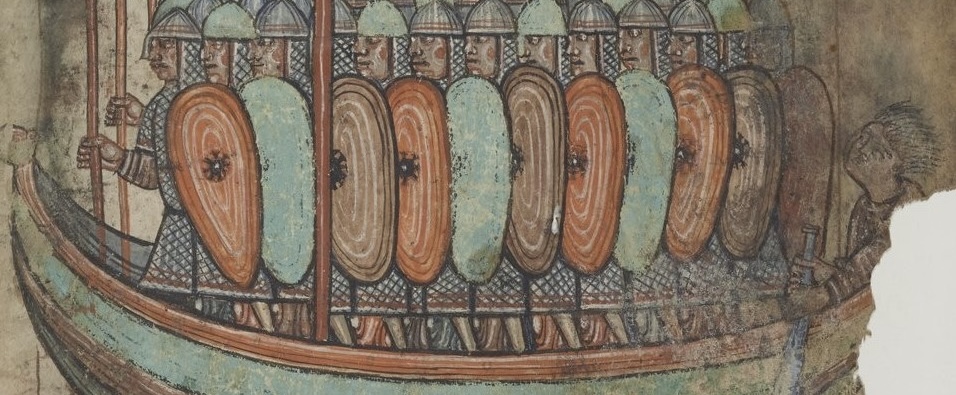
The Seafarer is a poem from the Exeter Book, a 10th century codex of Old English which sprang from a project of monastic reform and restabilisation following a long period Viking attacks and the subsequent disrepair of Christian places and their spiritual practices.
The poem is mostly secular with a religious addition, possibly added later, at the end. The Seafarer gives us a journey of anxieties and longing, its images rendered exotic by the passage of a millennium, its emotions expressed with an unabashed frankness and clarity. There are many translations, including a well-known version by Ezra Pound. Below is a very brief excerpt from a less ornamented translation.
ac a hafað longunge se þe on lagu fundað.
But he ever has longing who is lured by the sea.
Bearwas blostmum nimað, byrig fægriað;
The forests are in flower and fair are the hamlets;
wongas wlitigað, woruld onetteð:
The woods are in bloom, the world is astir:
ealle þa gemoniað modes fusne,
Everything urges one eager to travel,
sefan to siþe þam þe swa þenceð
Sends the seeker of seas afar
on flodwegas feor gewitan.
To try his fortune on the terrible foam.
— This poetic translation is from Old English poems, translated into the original meter, together with short selections from Old English prose (1918), by Cosette Faust Newton and Stith Thompson. The Old English itself is courtesy of http://www.early-medieval-england.net/hwaet
If you enjoyed this, you might enjoy Gerard Manley Hopkins’ striking poem The Windhover.
 Jane Alyson Clarke
Leave a comment