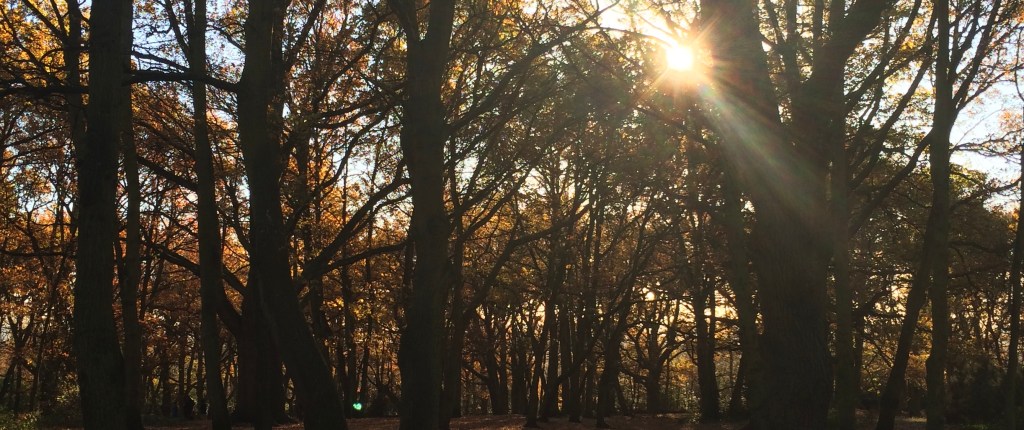
“Berries have come early to the rowans of Edinburgh this year. A few trees have already shed or partly-shed their leaves following August’s drought, making it easy to spot the blackbirds and thrushes bobbing up and down atop heavy bunches of bright red fruit.”
This is a remark I made on a dormant Substack in September three years ago. 2025 had a similar drought, with similar outcomes. It seems we are now experiencing something called a mast year.
A mast year occurs when various trees and shrubs produce an over abundance of fruit or nuts. Now stretch up your arms and pretend you’re a tree.
A warm, dry, and pollinator-friendly spring will give you the opportunity to produce more fruit. Producing more delicious fruit for the rodents, birds and insects creates a greater chance a few of these fruits may remain uneaten. And then you will actually have offspring, which is important because a forest (as you know; you’re a tree) is an entire ecosystem which forms its own symbiotic world. Critically, you must produce all of these extra fruits or, indeed, nuts in tandem with others of your species, and at the same time as other species subject to the same predation.
There’s no point in being the most delicious little tree in the forest, after all.
Furthermore, my deciduous friend, one mustn’t go around being sexually profligate every year. Extra fruit uses extra energy, leaving less for growth, and you’re never going to become part of the canopy that way, are you?
No. Which is why a mast year can only happen every five to ten years.
And you have to pick the right year, of course. If all of the fruit-eating creatures are absolutely starving, then good luck having any offspring. Your family in potentia will be munched. They’ll probably be scoffed before you’ve even got as far as dropping them. What a waste! You’d have expended a whole lot of energy you might have used in the race for sunlight.
OK, you can put your arms down now.
Because I can’t resist on account of being a terrific nerd, here are the linguistic ancestors of the “mast” in “mast year” according to Etymoline and the OED:
- Current meaning: fallen nuts or acorns serving as food for animals
- Old English: mæst, the collective name for the fruit of the beech, oak, chestnut, and other forest trees, especially serving as food for swine. The verb form is mæsten, meaning “to fatten or feed.”
- In Dutch and Old High German (and, if Google Translate is anything to go by, occasionally modern German) mast also translates as the noun “feed” as in “fodder”
- Proto-Germanic: masto
A mast year is not only useful to humans who fancy a feast of chestnuts, it’s also excellent news if you’re a swineherd living near common land because now you can let your sounder of swine loose on the common to snuffle up all the fallen nuts. For free. This falls under one of the extant Rights of Common known as the Right of Pannage (or Mast). If that sounds like some mediaeval nonsense a modern smallholder would never take advantage of, I can only say to thee ho ho ho, for thou hast clearly never met a farmer.
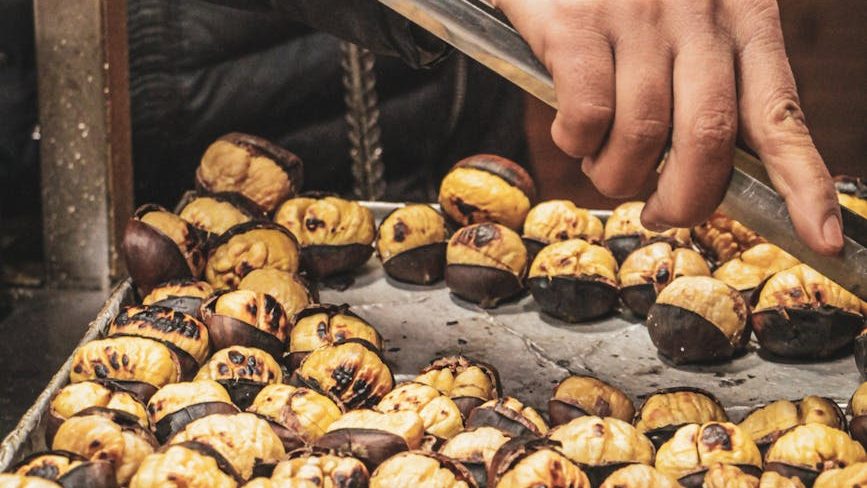
Best of luck with your chestnut-gathering in 2025, fellow commoners.


Leave a Reply